The first time
Triacastela → Santiago
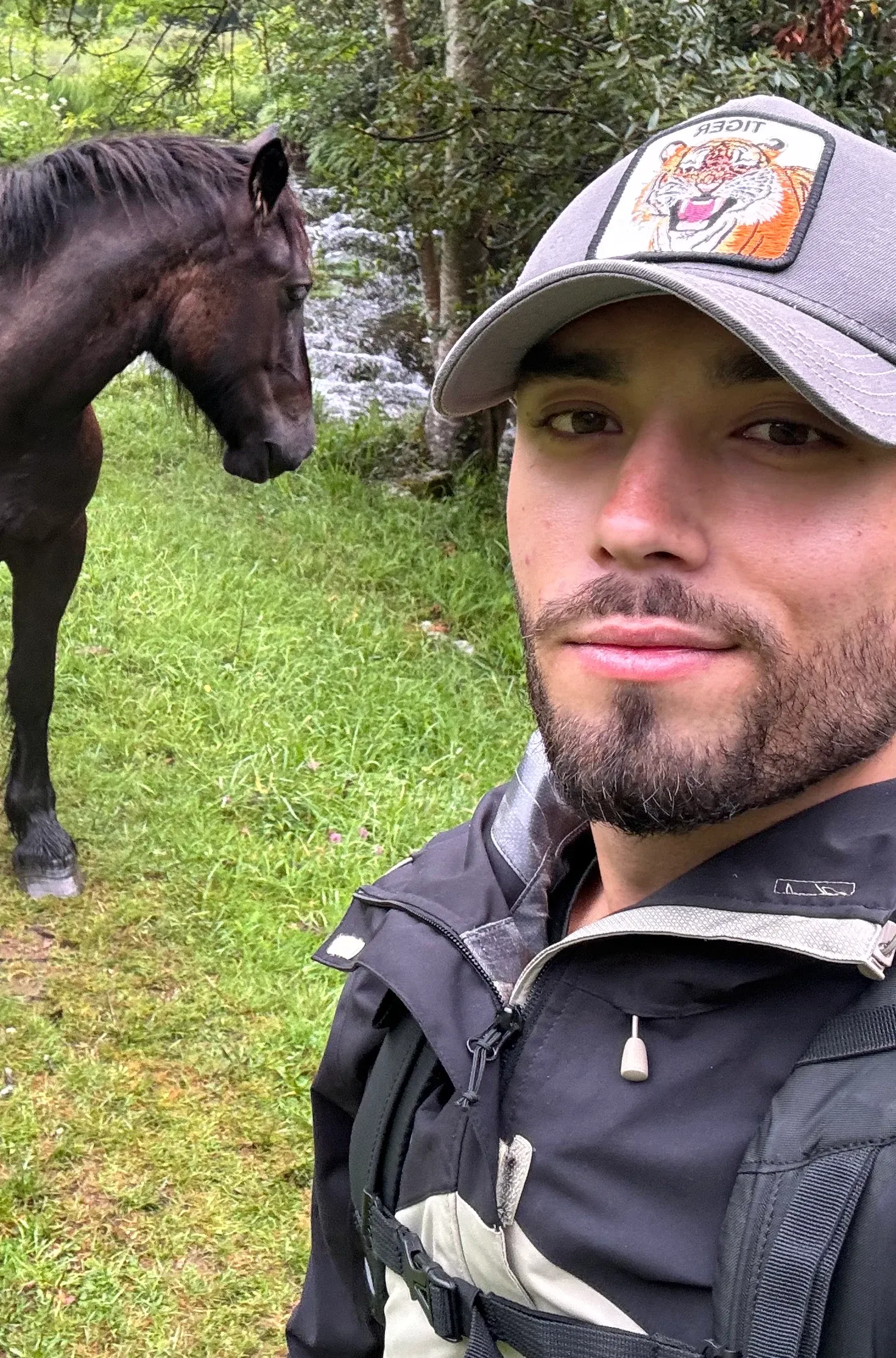
It was a bar idea. A friend and I looking at a map on our phones, two beers in: "what if we walked the Camino?" Sarria to Santiago, the stretch everyone does, the "easy" one. And then, because it didn’t feel like enough, we pushed it back a bit further: Triacastela. A hundred and thirty kilometres. Four days. No doubts, no calculations. We said yes before we’d thought about it, the way you say yes to important things when you’re barely into your twenties.
I hadn’t walked ten kilometres straight in my life. I found that out later, while I was living it. At the time all I knew was that I had a new backpack, half broken-in boots, and blind faith that the body holds up to whatever you ask of it.
We prepared what you can prepare in a week: an itinerary, albergues, the list of essentials. Everything else — the real hours, the weight of the climbs, what the July sun at midday does to a body that has never walked forty kilometres — none of that fits in a spreadsheet. You learn that on foot.
And I learned it on foot, every single day. The first day it was blisters. The second, my knees. By the third I no longer knew if it was my body that hurt or my head that had thrown in the towel.
We got in late that third day. I could barely walk, dragging every step, and the albergue had kept our booking but not a bed: they put us in a sort of storeroom, a pen with a tiny bunk where you couldn’t even stand up, couldn’t move. I fell apart. Completely. I didn’t have dinner. I left my friend eating alone downstairs and went up to lie down, not talking, no strength left even to be hungry. I just wanted to sleep and for it to be over — to reach Santiago as soon as possible, not out of desire, just to be done. My head wasn’t ready for what I was living, and I didn’t have a single tool to face it. Not one.
But I made it.
Knees wrecked, skin raw, and my head empty in a way I’d never felt before. I made it. And from those four days I brought back something I didn’t expect: not a nice memory, but an uncomfortable lesson — that I’d completely underestimated what I was doing, and that even so, badly prepared and worse trained, body and mind had found a way to keep going. It all could have stopped there. A story from your twenties, a photo at the cathedral, a tale to tell at dinner parties. If it had stopped there, what you’re reading right now wouldn’t exist.
I came back
San Sebastián → Gijón
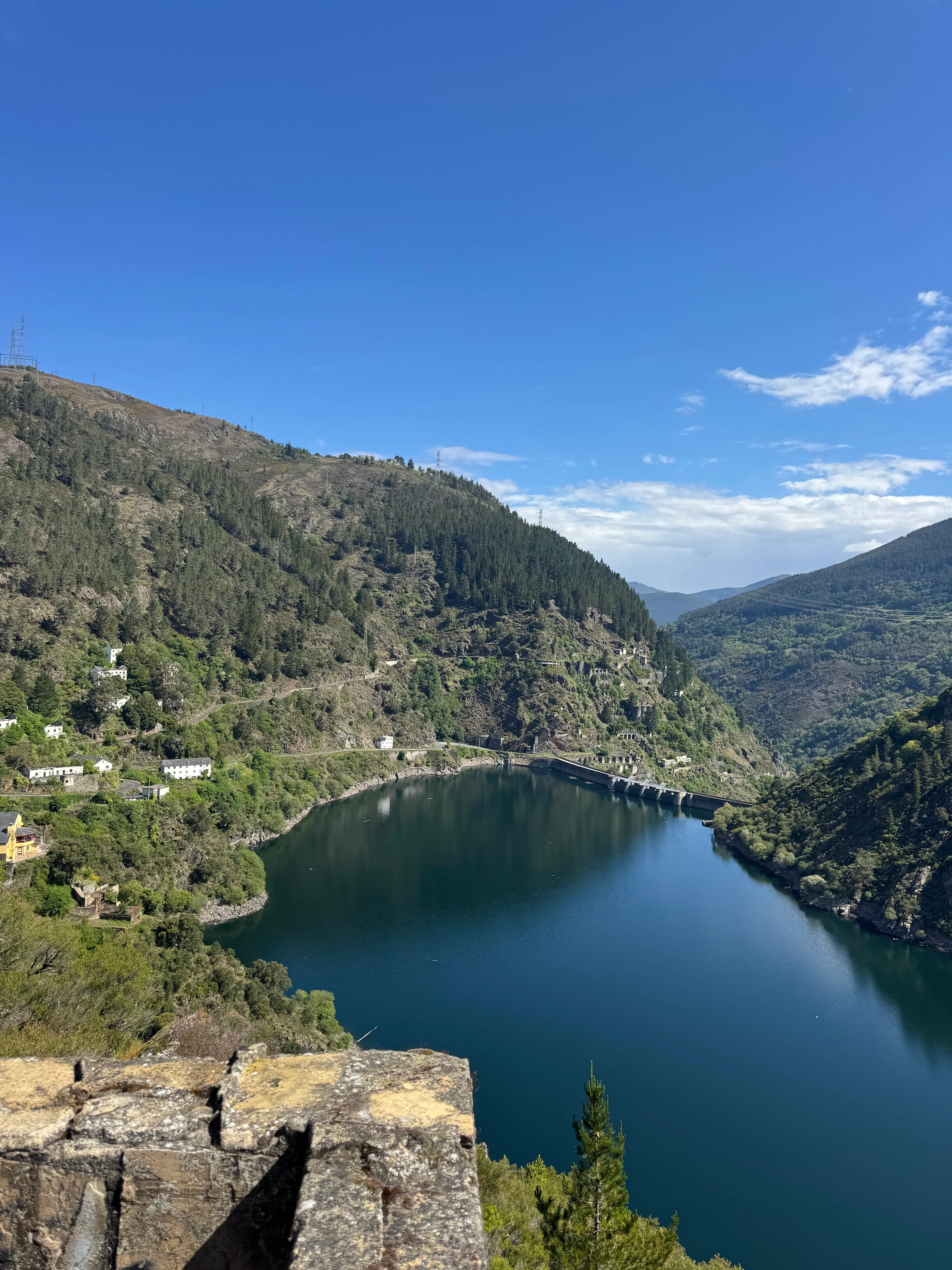
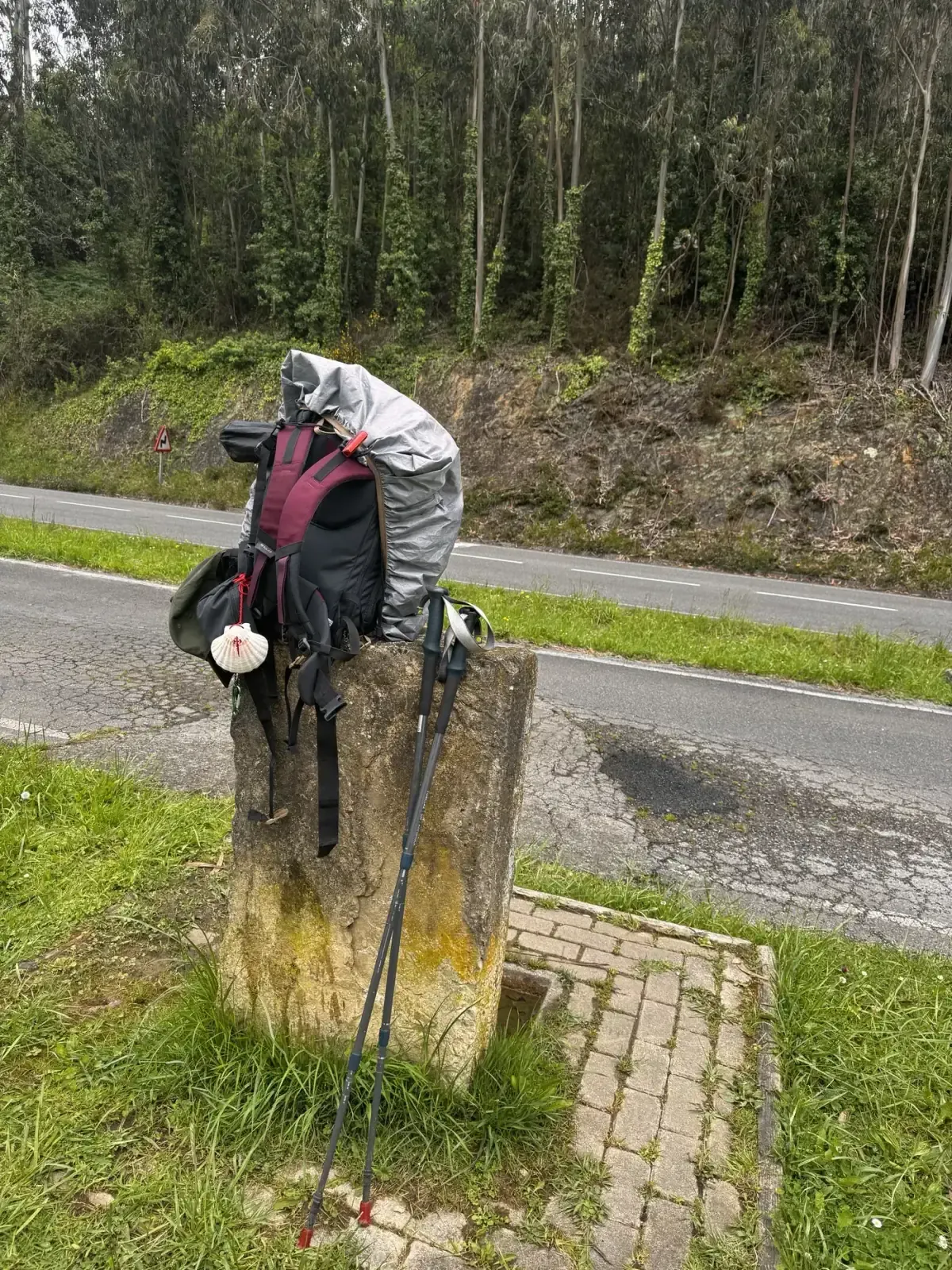
Two years later something had shifted. Sport had stuck to my skin, and so had the habit of walking. I decided to do a Camino alone: the whole Norte, end to end, in two trips. It sounded crazier than the first one. But there was something else, something I hadn’t told almost anyone: it was the first time in my life I was setting off alone on a trip that long, walking, with no one I knew waiting at the end of each stage. That brought a different kind of fear, an uncertainty I hadn’t felt in Triacastela, where at least there were two of us.
I planned it myself. I built the stages to measure, found my own lodging. It took me several weeks. I checked different websites, booked through different channels — WhatsApp, phone, email, Booking — and that’s when it hit me how complicated it is to organize a Camino alone when you’re gone for eighteen days.
I pulled it off. I had it all written down in my spreadsheet, so there’d be no surprises.
And there were anyway.
Day by day, the Camino teaches you what you need and what you have to give. Listen to it, and everything goes fine. Try to push past it, and everything goes wrong. You get lost. You think it’s only a few kilometres and you double up stages, when maybe you didn’t need to if you’d really known the hours and the toughness of the climbs waiting for you. It was all lessons. And my head kept a running tally.
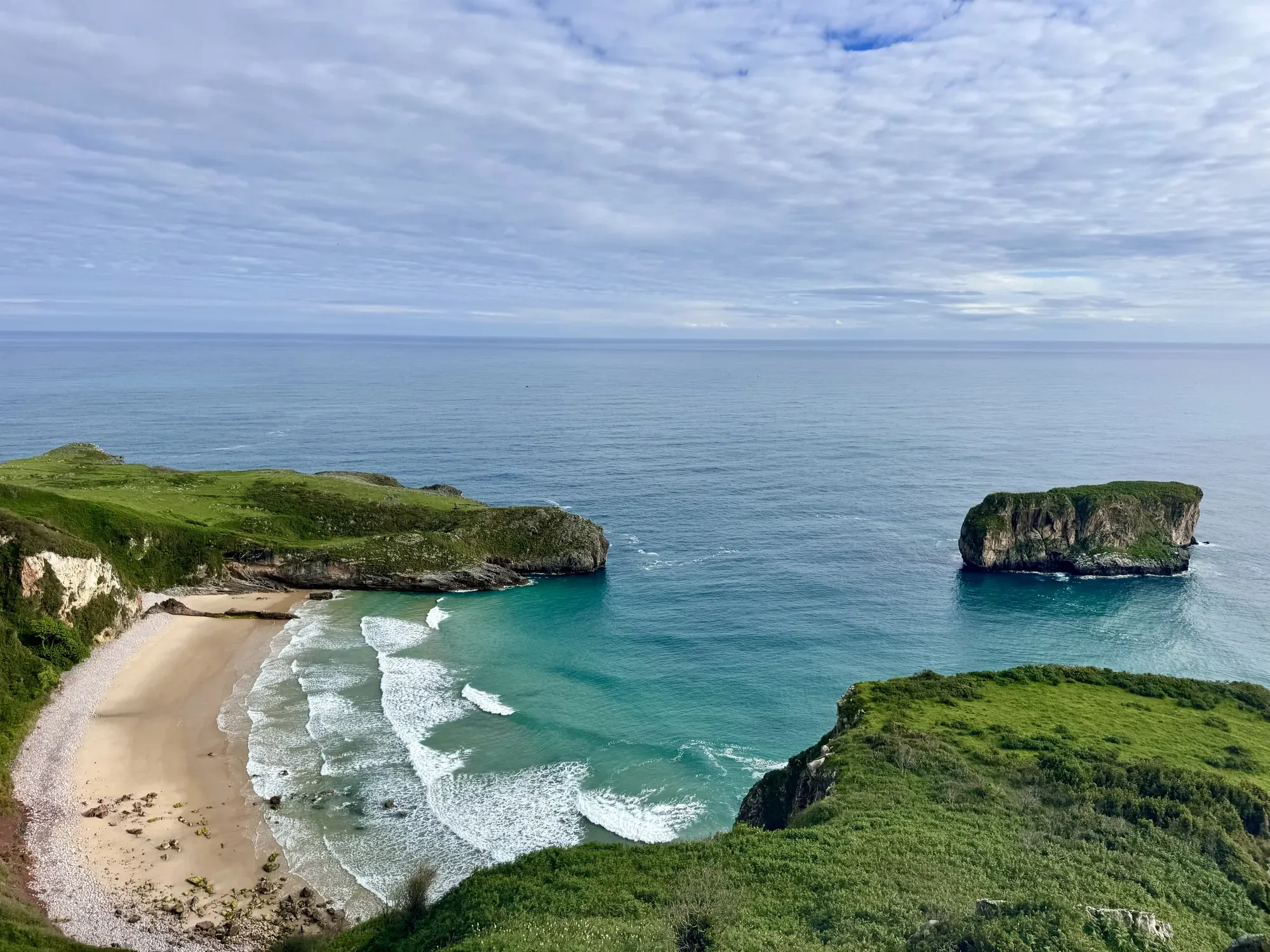
But what really changed things wasn’t in the spreadsheet. This Camino wasn’t like the one to Sarria. It felt purer, more human — pilgrims lending each other a hand without knowing each other at all. People saw me walking alone and didn’t hesitate to fall in step, to talk to me, to share a stage. With them I’d forget how much the backpack weighed and how many kilometres were still ahead. The first few days everything felt strange, everything was heavy, the fear was still there. But by the seventh day of walking, it had become my life — as if I’d always done this. The backpack stopped weighing anything. If something hurt, it passed quickly. And walking between the green and the blue of the sea became the only thing I wanted to do. That’s when what everyone talks about woke up in me: the pilgrim spirit. It settles into you in such a way that you have to go out every year, because you feel the Camino calling you.
I came back again
Gijón → Santiago
I set out to finish the Norte. And organizing it, exactly the same thing happened as the two times before: nights again with the spreadsheet open, browser tabs multiplying, back-and-forth messages with albergues that took days to answer, calls at nine at night to lock in a bed before it filled up. The third time around I didn’t even have the excuse of inexperience. It was a routine stealing hours I’d rather have spent thinking about the Camino, not its logistics.
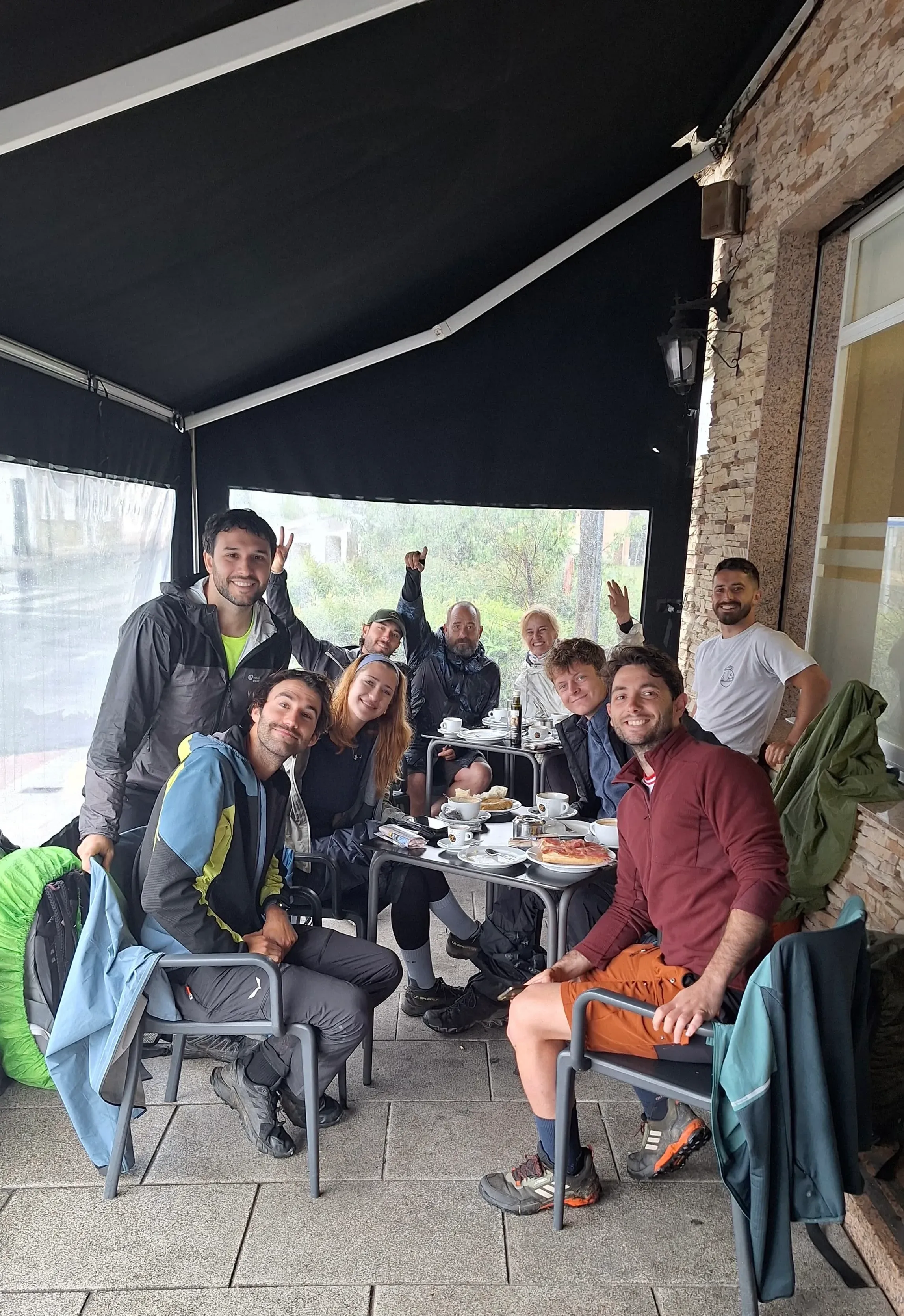
But this second year proved to me that the Camino isn’t about walking and looking at scenery. It’s the people who show up out of nowhere and decide to share it with you. You start out joining two people and reach Santiago as a family of ten.
When one door closed, the Camino opened another
The hospitality of the Camino
I got to Lourenzá, a small village in Lugo, at two in the afternoon. I showered and went out to find somewhere to eat. There were barely any pilgrims around, and only one bar seemed to be open. I went in and asked for a table for one. The owner must have been having a bad day: he told me, none too kindly, that he wouldn’t feed me until he’d served the workmen. That they came first.
I didn’t like the way he treated me. I left. I’d rather go without lunch than stay somewhere I wasn’t treated well.
Next door there was a café with no food. Outside, a man was having a soft drink and heard me asking around. I told him how I’d been treated at the bar. He told me not to give it a second thought, that the owner was about to close anyway. And then he said something that left me speechless:
"If you’re not in a hurry, I’ll take you to eat somewhere around here. You’ll eat like you’re at home."
I didn’t think twice. I got in his car. Along the way I saw that everyone around here knew him: the waiters greeted him, the Guardia Civil greeted him. I ate like I hadn’t eaten the whole Camino, and when he tried to pick up the bill I wouldn’t let him: I owed him the whole day.
And that wasn’t enough for him. Afterward he wanted to show me his village, its valleys, its stories.
I’ll never forget that name: Lourenzá. It changed the way I think. After so many years living in a big city like Madrid, where everything is masks and it’s hard to find people that pure, that genuine, living something like that forces you to rethink a lot of things. You value being there more, living the Camino. How much we still have to learn. And how grateful you have to be to get to live it. It’s one of the reasons I keep walking the Camino, and one of the reasons I never stop telling people they have to live it at least once.
His name was Jose.
Goal met
The whole Camino del Norte, end to end. It could have ended there.
Something told me it wouldn’t.
And I came back
The Primitivo
This year I set my sights on the Primitivo. People had told me so much about it that I needed to see it with my own eyes.
Eleven at night, at home, laptop open on my knees. And there it was again: copying the same old spreadsheet, the same one I’d used on the Norte. With the same excitement as day one, four years ago. But this time something clicked differently.
I stopped and thought: this should take three taps, not a spreadsheet at this hour. Being able to download the GPX for my own custom stage without having to pray someone on Wikiloc had already walked the exact stretch I wanted. Having lodging and routes in one place, not scattered across twenty tabs.
I didn’t want to start a travel service. I wanted to use what I know how to do — I’ve spent more than ten years building mobile apps — to build the tool that ties it all together. I knew others existed. But none of them did what I had in mind.
So I started writing down the pain points we all suffer through, and how to connect them.
Along the Camino I kept running into other pilgrims, and I’d tell them the idea. I tested it against them, stage after stage, and saw the problem wasn’t just mine: it was everyone’s. Every day of walking, my head was a factory of ideas that never stopped — writing things down, crossing them out, refining.
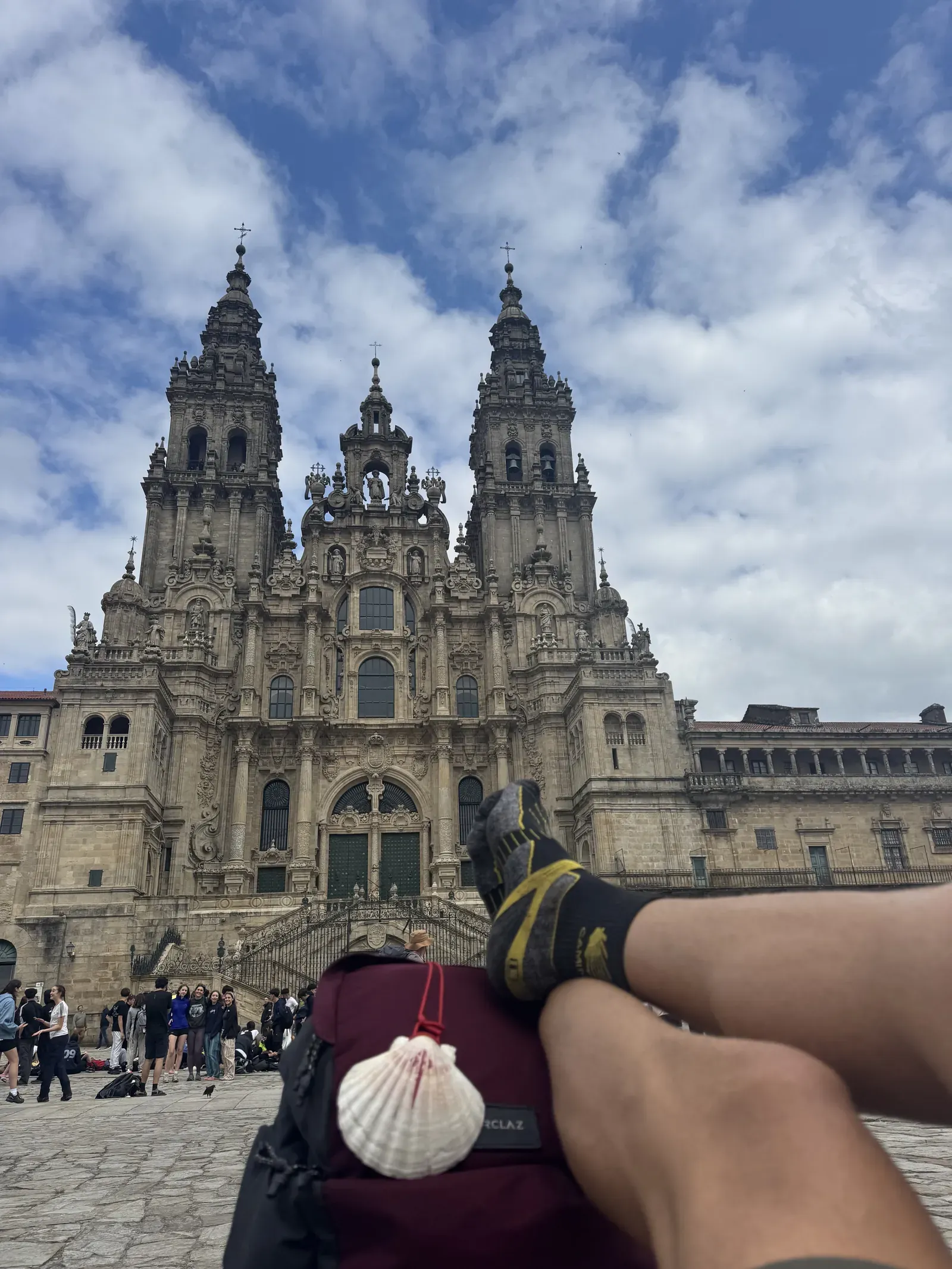
I got to Santiago and stood in front of the cathedral. I lay down on the ground, a good half hour, without moving. And there, lying down, it became clear: I had to make it real. I had to leave a mark.
That’s how Iterum was born.